I've always enjoyed planning trips almost as much as taking them. But organizing a packed itinerary, especially one involving hikes, long drives, reservations, and alternative activities, can quickly become overwhelming.
I wanted to create something that made those details easier to digest while capturing some of the excitement of the trip itself. What started as a personal itinerary design gradually evolved into a flexible system of reusable Figma components.
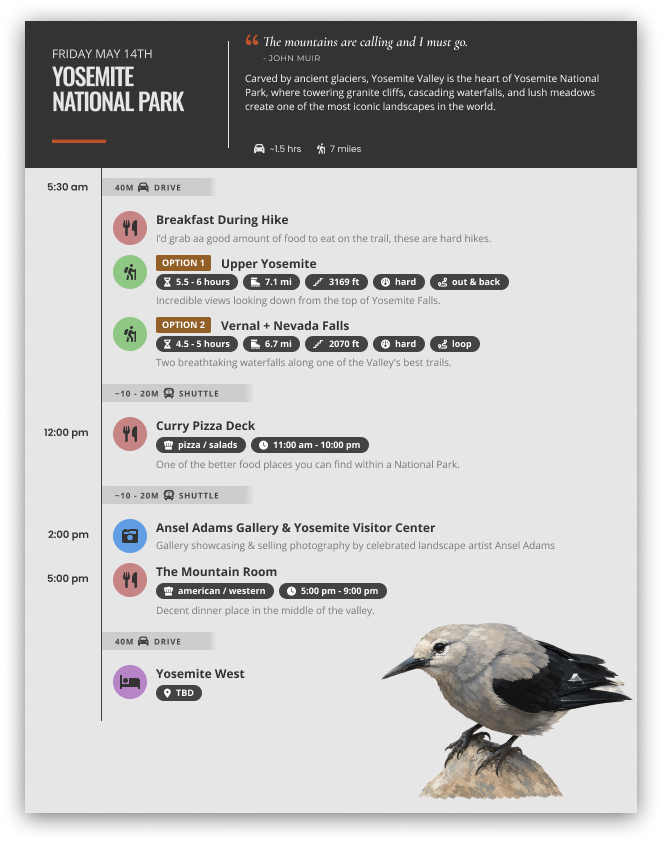
A single day of travel can involve a surprising amount of information. Departure times, driving distances, trail difficulty, restaurant hours, and backup plans all compete for attention.
The challenge was to establish a clear hierarchy that made an itinerary easy to scan without sacrificing the details needed to make informed decisions along the way.
Rather than designing every day individually, I built a reusable component system in Figma. Activity types, metadata, descriptions, and time indicators can be adjusted independently, allowing itinerary items to adapt to different content without requiring custom layouts.
Auto Layout and component properties help maintain consistency as items are added, removed, or rearranged. The result is a system that supports everything from a simple day of sightseeing to a full schedule of hikes, transfers, and reservations.
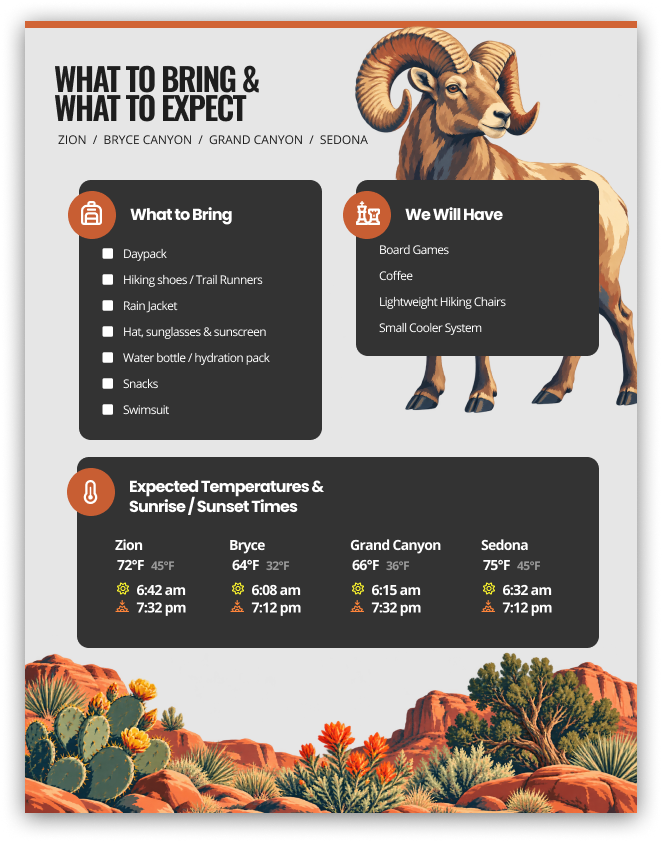
Planning a trip involves more than deciding where to go. I expanded the design to include practical resources like packing lists, expected temperatures, and sunrise and sunset times.
These additional pages follow the same visual language as the daily itineraries, creating a consistent experience that helps travelers prepare before the adventure begins.