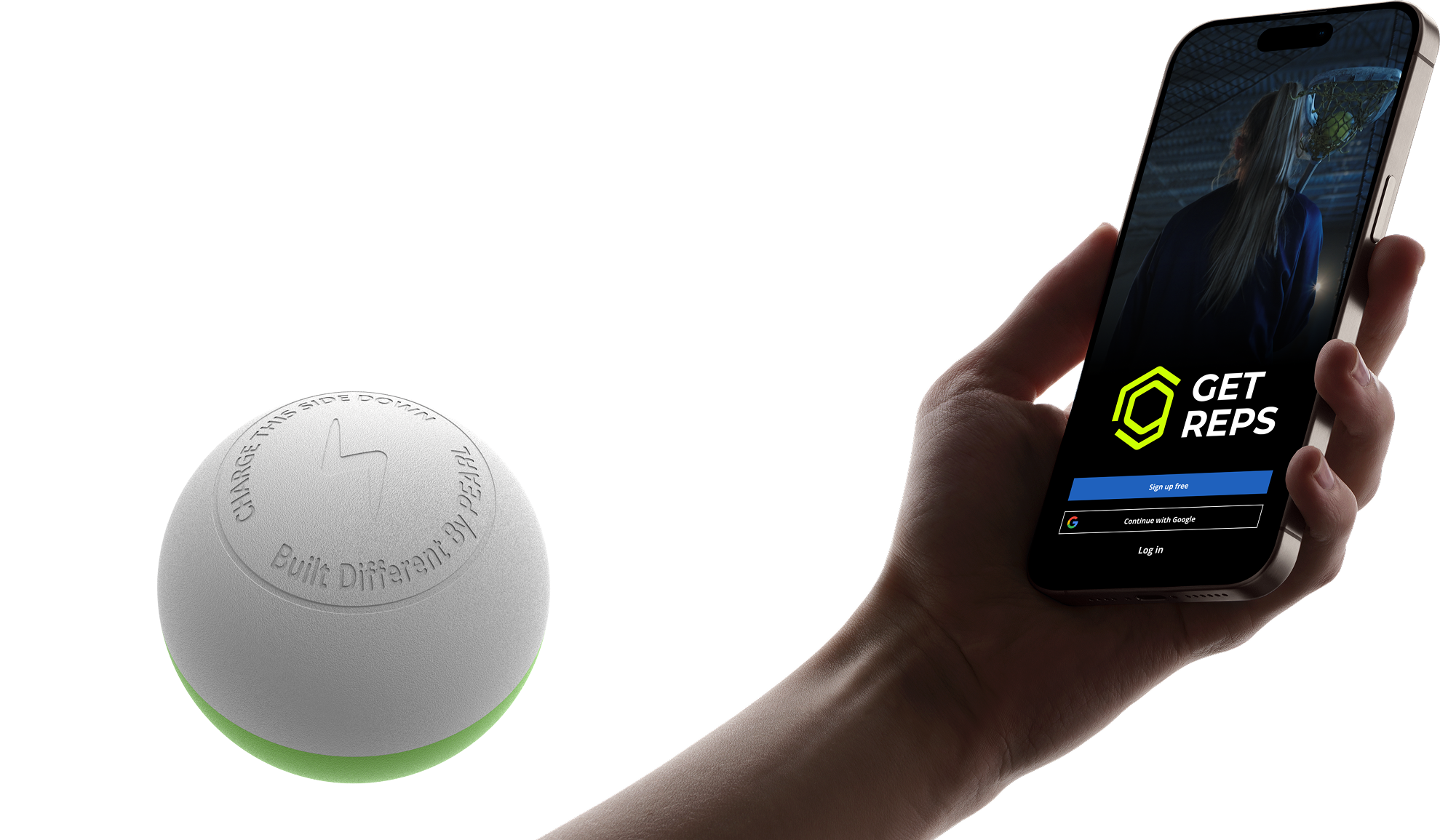
REPS was preparing to launch the R1, a connected lacrosse ball that could measure throw speed and automatically capture training activity. I helped rethink the mobile experience around this new capability, integrating performance data into the existing app while creating new ways to encourage continued training.
The R1 introduced something the existing REPS app had never had before — performance data generated automatically during practice.
But simply connecting a Bluetooth ball and displaying its measurements wasn’t enough. The app needed to turn that information into an experience that felt useful to athletes rather than a collection of numbers.
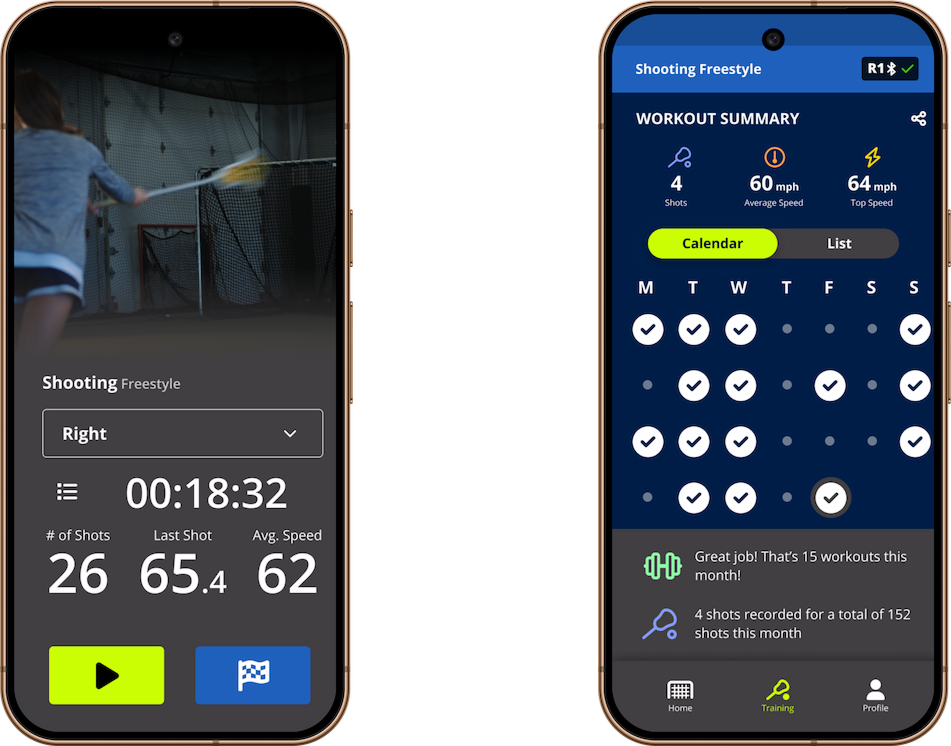
I focused on integrating R1 data naturally into the existing training experience, highlighting metrics like shot count, speed, workout history, and progress without making the hardware feel like a separate product.
Tracking performance created an opportunity beyond measurement.
Lacrosse is competitive by nature, so I explored ways to use streaks, social activity, and player-to-player comparison to give athletes more reasons to return to the app.
Rather than gamifying training for its own sake, these features reinforced behaviors players already cared about — practicing consistently, improving, and seeing how they stacked up against others.
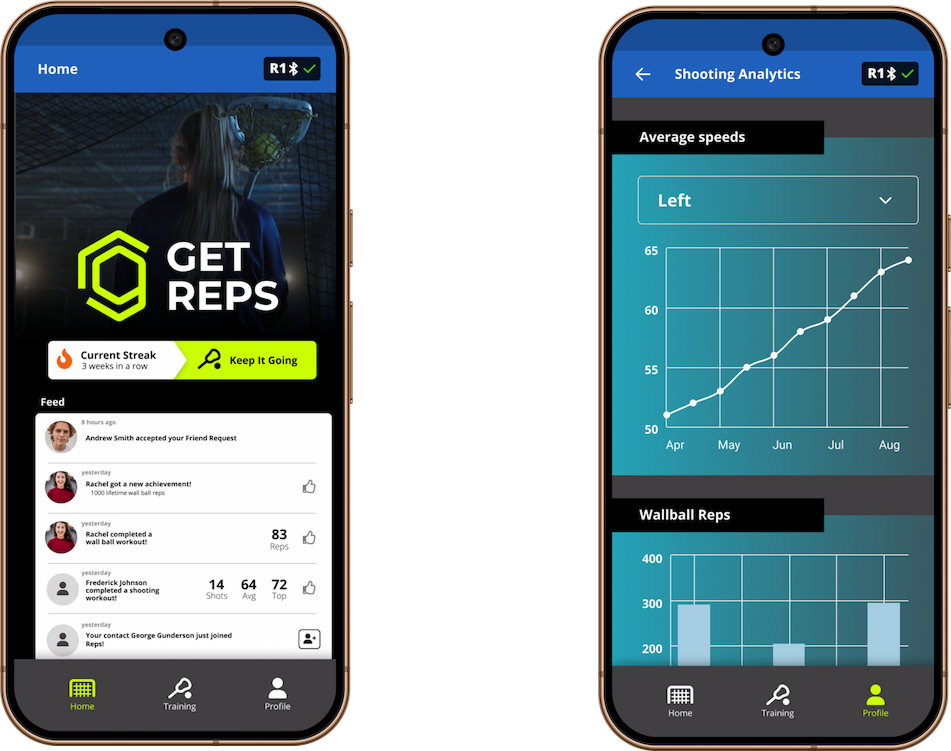
Personal progress
Can I improve on my own performance?
Consistency
Can I keep my training streak going?
Competition
How do my results compare with other players?
Community
What are the people I train with accomplishing?
Together, these systems extended the value of REPS beyond simply checking the speed of a throw.
As the lead designer, I worked across the core mobile experience and the integration of REPS' first connected training product.
The redesign helped turn the R1 from a piece of connected hardware into part of a broader training ecosystem. By connecting performance data with progress, competition, and repeat training, the app could create value beyond the measurement of a single throw.
One of the most interesting parts of REPS was designing around a product that existed in both the physical and digital worlds.
The R1 could generate increasingly detailed performance data, but more information didn’t automatically create a better experience. The bigger opportunity was connecting that information to the things athletes already cared about: improving, practicing consistently, and competing with one another.
The project reinforced that a feature becomes much more valuable when it connects to a reason for people to keep using the product.